Who I Help
Best fit for : Online-only therapy for adults (27–60) who were socialized as girls/women and resonate with late-identified or self-identified ADHD/autistic/AuDHD/HSP patterns, especially high-masking burnout, people-pleasing, and shame.
Welcoming note : If you’re trans, nonbinary, or questioning and this focus fits your lived experience, you’re welcome to reach out for a quick fit check. I’m LGBTQIA+ affirming and many clients are lesbian, bisexual, or asexual.
Common therapy goals: Common goals include understanding yourself through a neurodivergent lens (what’s really going on underneath), reducing shame, and creating supports, boundaries, and communication strategies that actually work for you.
Where you must be located: You must be physically located in Texas or a PSYPACT state at the time of session.
Not a fit if you need: Crisis/urgent stabilization, higher levels of care (IOP/PHP), court-related services, or testing/diagnostic documentation.
About The Therapist & Licensure
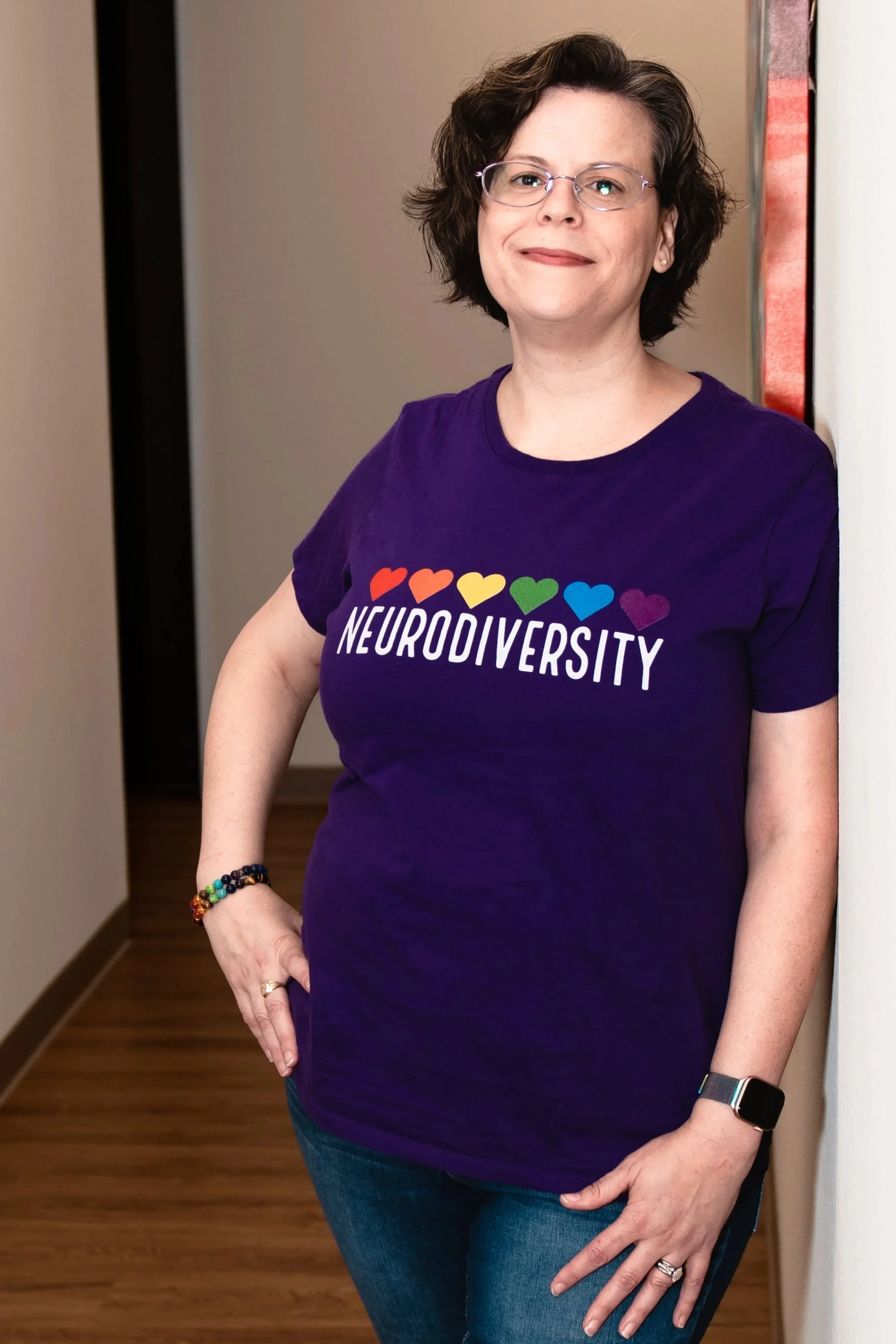
Dr. Christine Henry is a Licensed Psychologist in Texas and is authorized to provide telehealth to clients located in Texas and PSYPACT participating states as permitted by PSYPACT including: Arizona, Colorado, Connecticut, Delaware, Florida, Georgia, Idaho, Illinois, Indiana, Maine, Maryland, Michigan, Minnesota, Montana, North Carolina, New Hampshire, Nevada, Ohio, Pennsylvania, Rhode Island, South Carolina, Tennessee, Texas, Utah, Virginia, Vermont, Washington, Wisconsin, West Virginia.
Texas License: Licensed Psychologist — Texas License #35103
Certification (credential, not licensure): National Certified Counselor (NCC) National Board for Certified Counselors (NBCC) #77114
Telehealth authorization: PSYPACT Authority to Practice Interjurisdictional Telepsychology (APIT) #5648
Where client must be located: Client must be physically located in TX or PSYPACT states at session time.
Client Ages: 27–60 (No minors).
Format: Online-only therapy.
Session frequency: Weekly or biweekly. No monthly sessions for new clients.
Availability: Tue–Fri, 9am–3pm CT (no after-hours crisis coverage).
Payment: Private pay only; superbill available (I don’t accept insurance).
Cancellation policy: 24-hour notice required.
Services & Fees (Online)
Free Consultation (20 min, online) — $0: Brief call to discuss what you’re hoping for, my approach, and whether I’m a good fit. If so, we’ll schedule an intake.
Initial intake session (50 min): $250
Individual therapy (50 min): $235
Neurodivergent support group (50 min): $75/session

I often work with adults who…
People-please, struggle with boundaries, and feel responsible for others’ comfort.
Have lots of self-awareness (reading/research/reflection) but struggle with follow-through (getting started/finishing) and consistency (maintaining habits over time).
Carry shame about productivity and label yourself “lazy” when it’s really overwhelm, shutdown, or executive dysfunction.
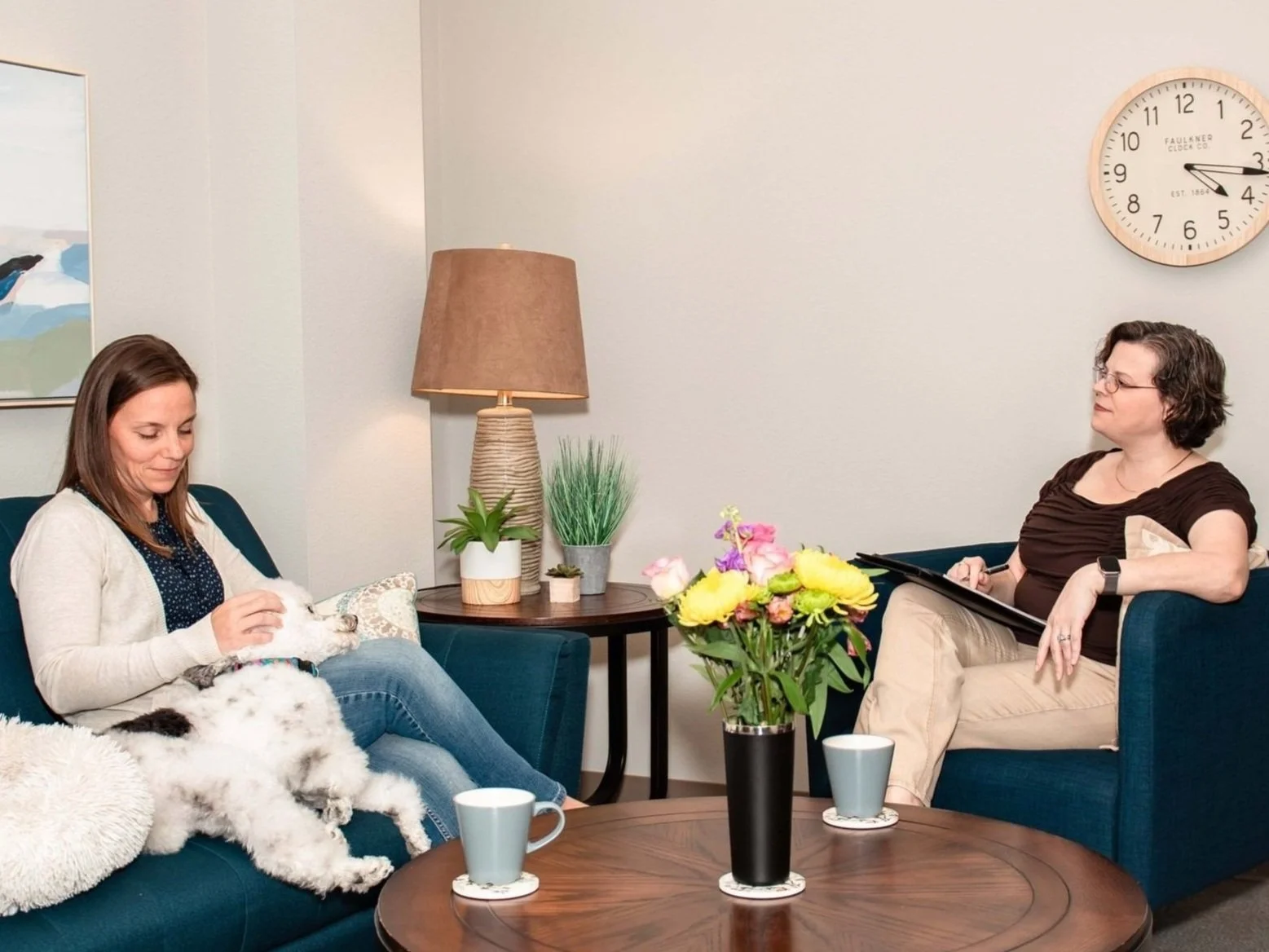
You’re most yourself with animals, regulated, present, accepted, and you want more of that ease in relationships with people. With people, you tend to mask, overthink, or second-guess.
Have been told it’s ‘just anxiety/depression,’ but daily challenges persist and you’re exploring whether ADHD/autism/AuDHD explains the pattern.
Recently discovered, self-identified, or were diagnosed with ADHD/autistic/AuDHD traits and feel a mix of relief, confusion, grief, and imposter syndrome and want help making sense of what it means for their life.
Carry a persistent sense of being "wrong" or "too much/not enough" from growing up with criticism, emotional invalidation, or restrictive religious expectations, often leading to shame, hypervigilance, and self-doubt.
Experience cyclical mood changes (irritability, anxiety, brain fog, low energy) linked to PMDD/perimenopause/thyroid/PCOS/postpartum and want emotional support to plan for the hard weeks, alongside care from a medical provider.

You may be a strong fit for this therapy if:
You’re a deep diver who’s already done a lot of self-reflection (books/podcasts/journaling) and wants help connecting patterns, finding the “missing pieces,” and turning insight into doable action.
You prefer active, collaborative therapy with concrete supports (structure, tools, accountability), while still making room for identity, values, and the bigger “why.”
You come to session with notes, lists, or specific questions and want help translating what you notice into next steps you can actually follow through on.
You process out loud (circling, losing your thread, word-finding), and you want help slowing down, organizing your thoughts, and naming what you feel, without pressure or judgment.
You’re looking for neurodivergent-affirming care for ADHD/autism/AuDHD/HSP especially if you’re late-identified, self-identified, or questioning, in a space that is validating and non-pathologizing.
Pet loss and anticipatory grief can be part of our work, especially when it intersects with neurodivergence, masking, overwhelm, or relationship patterns (rather than being the only focus).
You’re open to small between-session experiments (practice, tweaks, troubleshooting), even when overwhelm, shutdown, or executive dysfunction makes consistency hard.

If several of these describe you, we’ll likely work well together.
I’m likely not the right provider and not a good fit, if you need any of the following:
Legal/documentation: court-involved care, custody evals, court letters.
Crisis / urgent stabilization: active suicidal intent, immediate safety concerns (call 988 / ER).
Need higher level of care: IOP/PHP, multiple sessions per week, or intensive stabilization.
Need on-call/after-hours support between sessions (I don’t provide crisis coverage outside session hours).
Testing/documentation: diagnostic evals, ESA letters, disability/accommodation forms. If you’re seeking these services, please see my Testing page for referrals.
A coaching style or highly structured, worksheet-driven approach with lots of homework, frequent between-session support, or a fixed short-term timeline.
Couples/family therapy as the primary focus (I mainly offer individual + group).
Want medication management. I don’t prescribe medication; I can coordinate with your prescriber if helpful.
Outside my focus: I work with adults 27–60 who resonate with late-identified/self-identified ADHD/autistic/AuDHD/HSP patterns and girl/woman socialization. If you’re unsure (including trans/nonbinary/questioning), you’re welcome to request a quick fit check.

My Approach to Therapy (ACT + neurodivergent - affirming)
My therapeutic approach is relational and neurodivergent-affirming, integrating Acceptance and Commitment Therapy (ACT), attachment theory, family systems, and relational perspectives. I also incorporate nervous system frameworks, including polyvagal theory, and elements of cognitive-behavioral therapy (CBT) when appropriate.
I use these approaches to help clients understand how early childhood experiences, family dynamics, attachment patterns, and growing up with unrecognized neurodivergence influence their sense of self and relationships. Therapy also focuses on reducing struggles with self-criticism, shame, emotional overwhelm, and rigid expectations while developing practical strategies for emotional regulation, psychological flexibility, and values-based living.
My style is collaborative, engaged, and practical, combining clinical expertise with lived neurodivergent experience. The goal is greater self-understanding and building a life that supports each client's needs, values, and neurotype.
What we’ll work on in therapy:
Executive function
Build executive function supports for time management, prioritizing, and simple routines you can maintain.
Create follow-through supports for starting and finishing, especially when motivation drops or capacity is low.
Boundaries + relationships
Build external communication that fits your brain such as making requests, setting limits, and navigating conflict without over-explaining, over-accommodating, or shutting down.
Shift relationship patterns like people-pleasing, fawning, conflict avoidance, and rejection sensitivity with practical strategies.
Emotions + shame (ACT-informed)
Learn to slow down and untangle thoughts so you can name what you feel and need internally (especially when you lose the thread or go blank).
Work with shame and self-criticism by separating who you are from old learned messages, and unhooking from “not good enough” stories that fuel masking and people-pleasing.
Make space for the relief/grief of late discovery, including the grief of ‘what could’ve been,’ loosen ‘maybe I’m faking it’ stories, and build a clearer, more confident neurodivergent identity.
Loosen all-or-nothing thinking and build psychological flexibility so you can respond with more steadiness and choice.
Learn ways to quiet the mental replay, recover after misunderstandings, and avoid the long spiral afterward.
Nervous system + trauma-informed support
Identify sensory and nervous-system needs, and create shutdown/meltdown prevention + recovery plans.
Explore trauma-informed themes through a neurodivergent lens (chronic invalidation, developmental stress, sensory overwhelm, nervous-system reactivity).
Cyclical shifts
Track cyclical shifts in mood, energy, sleep, and executive function that may relate to hormones or health conditions (e.g., PMDD, perimenopause, postpartum, PCOS, thyroid issues) and build a coping plan for tougher weeks (alongside medical care).
Training, Experience & Credentials
Credentials
M.A. Mental Health Counseling (2002) — Purdue University.
Ph.D. Counseling Psychology (2008) — Purdue University.
Experience & Training
Providing psychotherapy (therapy) since 2002.
Early work: community-based settings (domestic violence shelter, substance use treatment, community mental health).
10 years in college counseling centers (Purdue University; Miami University–Ohio; Ball State University; University of Houston; University of Houston–Clear Lake).
Private practice since 2018.
In private practice, my work has increasingly focused on adults impacted by girl/woman socialization who resonate with high-masking ADHD/autistic/AuDHD/HSP patterns—especially where neurodivergence was missed or misunderstood. I use an ACT-informed, neurodivergent-affirming approach.
Looking for Support With Something Specific?
Next Step: Schedule Your FREE 20-Minute Video Consultation
Complete the CONTACT FORM (no phone call needed)
I reply within 1–2 business days. If it looks like a fit, I’ll send a few secure video time options, typically for that week or the next. If we decide we’re not a fit, I’ll suggest next steps for finding a provider who better matches what you need.
If you’ve been searching for…
A neurodivergent-affirming therapist for late-identified/self-identified ADHD, being autistic, or AuDHD (and HSP), especially high-masking (ideally someone who’s neurodivergent, too).
Support for high-functioning burnout (“I look fine, but I’m falling apart”) without reducing it to “just anxiety/depression.”
Help with rejection sensitivity (RSD), overthinking, and replaying conversations afterward.
Help stopping people-pleasing/fawning, especially when conflict or disappointing people feels scary.
Feeling socially drained with people, but regulated and at ease with animals.
I can’t get things done because overwhelm, shutdown, brain fog, or executive dysfunction gets in the way.
I’ve read the books / listened to the podcasts / done the research… but I still feel stuck.
Hormone shifts (PMDD/perimenopause/PCOS/thyroid/postpartum) make mood, energy, and brain fog worse and I want emotional support” (alongside medical care).
Therapy for complex trauma and the effects of abuse, emotional neglect, or being dismissed/minimized for years.
Help understanding how growing up with conservative religious beliefs, strict gender roles, or expectations to be obedient and put others first may still affect your self-worth, boundaries, and relationships.
Help processing why you feel worse after an ADHD/autism diagnosis, including grief, anger, and imposter syndrome (“I feel like I’m faking it”).
…you’re in the right place.
Plain-Language Summary
I provide private-pay, online-only individual therapy for adults ages 27–60 located in Texas or PSYPACT states. Best fit: late-identified or self-identified ADHD/autistic/AuDHD/HSP clients experiencing burnout, masking, people-pleasing, shame, rejection sensitivity, and relationship strain. Sessions are active and practical, with ACT-informed tools for executive function support, boundaries, communication, emotion regulation, and trauma-informed work at a pace that respects sensory and nervous-system needs. I do not offer crisis care, court-related services, or diagnostic testing/documentation.