Online Therapy in Houston, TX
Online therapy for late-identified ADHD and autistic adults, highly sensitive people, and those navigating trauma, grief, and complicated relationships.
Have you spent much of your life feeling different, overwhelmed, or like you're working harder than everyone else just to keep up? Maybe you've recently discovered that you're ADHD or autistic, or you're starting to question how your childhood experiences and relationships have shaped who you are today.
I'm Dr. Christine Henry, a Houston-based psychologist offering online therapy for adults who want to better understand themselves, process difficult experiences, and find ways of living that work for them. My approach isn't about fixing who you are or teaching you to fit into other people's expectations. It's about making sense of your experiences, recognizing your needs, and figuring out what feels right for you.
My approach to therapy is grounded in social justice, feminism, anti-racism, and LGBTQ+ affirming care. I recognize that our identities, lived experiences, and the systems we live within shape how we experience the world. I welcome clients of diverse backgrounds, identities, and beliefs, and believe that therapy should be a place where you don't have to hide or minimize important parts of who you are.

My Therapy Focus Areas for Houston Adults
I particularly enjoy working with adults who are discovering their ADHD or autism later in life, as well as those who have known for years but are still figuring out what that means for them.
Therapy often involves making sense of childhood experiences, relationships, years of masking or overaccommodating others, and needs that may have gone unrecognized for a long time.
My work isn't limited to ADHD and autism. I also help adults navigate complex trauma, grief, religious trauma, complicated family relationships, and the experiences of being a highly sensitive person. These concerns often overlap, and therapy doesn't have to focus on just one thing.
Therapy for Late-Diagnosed or Self-Identified ADHD and Autistic Adults
Learning that you're ADHD or autistic as an adult can bring a whole new understanding of your life. Experiences you once blamed on personal failures may begin to make sense in a different way. But that understanding can also bring grief, anger, or sadness about years spent trying to meet expectations that didn't fit who you are.
For some adults, these discoveries happen during perimenopause or menopause, when hormonal changes, disrupted sleep, and shifting demands can make strategies that once worked feel less effective. You might find yourself struggling with things you've managed for years and wondering why everything suddenly feels harder. Sometimes this becomes the starting point for recognizing ADHD or autism that has gone unnoticed for decades.
In therapy, we can explore how masking, internalized messages, childhood experiences, and relationships have shaped the way you see yourself. Rather than focusing on making you fit into neurotypical expectations, we'll work on understanding your needs and finding ways to make life work better for you.
This might involve developing strategies for everyday challenges, recognizing when you're approaching burnout, setting boundaries, or learning to trust your own experiences instead of constantly questioning yourself. There's room to process the emotional impact of discovering your neurodivergence while also figuring out practical changes that can make everyday life easier.
Does Any of This Sound Familiar?
Discovering you're ADHD or autistic later in life often involves looking back at experiences you've had for years and seeing them in a completely different light. Things you once blamed on personal shortcomings, personality quirks, or not trying hard enough may begin to make more sense.
Some experiences that may become clearer through late discovery include:
Friendships and social connections: Spending years trying to figure out the unwritten rules of friendships, rehearsing conversations, or overanalyzing interactions without understanding why connecting with others seems to take so much effort.
Putting everyone else's needs first: Becoming so accustomed to masking and accommodating others that you've lost touch with your own preferences, feelings, and needs.
Fear of rejection or disappointing others: Being highly attuned to changes in other people's moods, worrying that you've done something wrong, or feeling responsible for keeping everyone around you happy.
Difficulty setting boundaries: Having spent much of your life trying to fit in or avoid conflict, you may find it difficult to say no, ask for accommodations, or recognize when your own limits have been reached.
Social and sensory exhaustion: Realizing that what you've always thought of as being introverted, overly sensitive, or antisocial may actually involve sensory overload, masking, or the energy required to navigate social situations.
Executive functioning challenges: Looking back at years of struggling with organization, starting tasks, maintaining routines, or following through on plans despite working incredibly hard, and beginning to understand these experiences through the lens of ADHD.
Navigating perimenopause or menopause: Finding that brain fog, disrupted sleep, emotional changes, or executive functioning challenges are making everyday life harder, sometimes prompting you to question whether ADHD or autism might explain longstanding experiences.
Feeling disconnected from yourself: Wondering who you really are after years of adapting your behavior, suppressing your needs, or trying to become the person others expected you to be.
Late discovery isn't just about finding an explanation for your struggles. It can also involve grieving the support you didn't receive, questioning old beliefs about yourself, recognizing strengths you hadn't appreciated, and figuring out how you want to live now that you understand yourself differently.
You don't need a formal diagnosis to begin exploring these experiences in therapy.
What Can We Work on Together?

Understanding yourself as ADHD or autistic later in life can be a starting point, but figuring out what to do with that understanding is another part of the process.
Therapy gives us an opportunity to explore what's been working, what hasn't, and how you can begin making changes that fit your needs, values, and the way your brain works.
Depending on what brings you to therapy, our work might include:
Understanding emotional overwhelm: Recognizing what contributes to emotional or sensory overload, how your nervous system responds, and what helps you recover.
Exploring masking and identity: Making sense of the ways you've adapted to others' expectations and discovering which parts of yourself you'd like to express more freely.
Recognizing your needs and setting boundaries: Learning to notice what you want, communicate your limits, and make room for your needs without feeling responsible for everyone else's reactions.
Processing childhood experiences and trauma: Understanding how earlier relationships, family dynamics, and experiences of being misunderstood may still influence how you see yourself.
Navigating relationships: Exploring patterns in friendships, family, and romantic relationships, including people-pleasing, conflict avoidance, and difficulty trusting others.
Developing self-compassion: Questioning longstanding beliefs that you're lazy, too sensitive, difficult, or not doing enough, and developing a more understanding relationship with yourself.
Finding strategies that work for your brain: Exploring practical ways to manage everyday responsibilities, reduce burnout, and make your environment more supportive of your needs.
We don't have to address everything at once. Therapy is a collaborative process, and we'll focus on what feels most important to you rather than following a predetermined set of set of goals.
A Houston Psychologist With Deep Roots in the Community
Houston has been part of my life since I was a teenager. I grew up in the Houston area and was a proud band geek, spending weekends performing in the marching band or traveling around for marching competitions. Some of my favorite memories from those years have more to do with the friendships, music, and being part of the band than anything happening on the football field.
After completing my graduate studies at Purdue University and beginning my career in university counseling, I eventually returned to Houston. As a Texas-licensed psychologist with over 20 years of clinical experience, I've spent much of my career working with adults navigating identity, relationships, and difficult life experiences. Before opening my private practice in 2018, I spent seven years working as a psychologist at the University of Houston–Clear Lake's Counseling Services (now the Counseling and Mental Health Center). I also previously worked at the University of Houston's Counseling and Psychological Services.

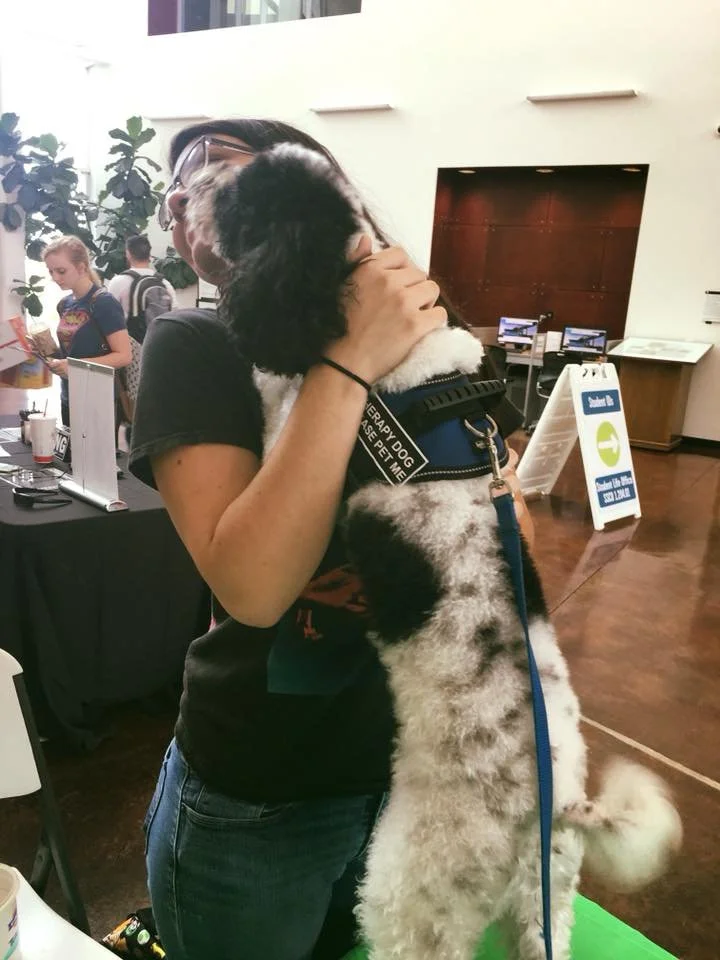
One of the most meaningful parts of my time at UHCL was working alongside my therapy dog, Dogtor Murphy. Following Hurricane Harvey in 2017, Murphy joined me in supporting students and members of the campus community as they navigated the aftermath of the storm. We also volunteered to provide support to the community following the Santa Fe High School shooting in 2018. Murphy had a special way of offering comfort and connection during difficult times, often without needing to say anything at all.
Murphy's contributions were recognized when he was featured in The Signal's 10 Most Fascinating People of UHCL of 2017.
Today, I provide online therapy to adults throughout the Houston area who are navigating late-identified ADHD or autism, complex trauma, grief, and complicated family relationships.

How Does Online Therapy in Houston Work?
One of the benefits of online therapy, especially in a city as spread out as Houston, is not having to plan your day around traffic on I-45, construction on 290, or roads flooding after an unexpected afternoon thunderstorm. Instead, you can meet with me from the comfort of your own space without adding another commute to your day.
Whether you're in The Heights, Montrose, Bellaire, Clear Lake, Pearland, Friendswood, The Woodlands, or somewhere else in the greater Houston area, you can attend therapy without leaving your home.
For neurodivergent adults, meeting from a familiar environment can also mean fewer sensory distractions, more control over your surroundings, and the option to have your pets nearby.
Getting Started With Online Therapy in Houston
If you're exploring ADHD or autism later in life, working through past experiences, or trying to understand patterns that have followed you for years, I'd be glad to talk with you about whether therapy together might be a good fit.
I offer online individual therapy for adults ages 27 and older throughout Houston, Texas, and participating PSYPACT states. My practice is private pay, and I can provide superbills if you'd like to seek out-of-network reimbursement. Appointments are available Tuesday–Thursday, 9 am–2 pm, and Friday, 9 am–1 pm, Central Time.
I offer a free 20-minute video consultation where we can talk about what you're looking for, answer any questions, and see if working together feels like a good fit.
Online Therapy in Houston, Bellaire, The Heights, Texas - as well as several other cities and states. See if I work with clients in your area: therapy locations.
How to Get the Most Out of Online Therapy
Find a private, comfortable space. Choose somewhere you can talk openly without worrying about being overheard. Your space doesn't need to be perfectly organized or distraction-free.
Use a computer when possible. A larger screen can make it easier for us to see each other's facial expressions and feel more connected.
Get comfortable. Bring your favorite blanket, a fidget, something to drink, or whatever helps you feel settled. You don't have to sit perfectly still or maintain constant eye contact.
Give yourself time to focus. Try to avoid working, answering emails, or multitasking during our sessions. Therapy is time set aside for you.
Stay in one place. For safety and privacy, sessions need to take place while you're stationary rather than driving.
And, of course, your pets are welcome! Whether your dog wants to curl up beside you or your cat decides to make an appearance on camera, they're welcome to be part of the experience.
Online therapy is available to adults throughout Texas, as well as clients located in participating PSYPACT states.