

I wish I could tell you I spent the drive to my mother in law's funeral thinking about happy memories. Instead, I found myself wondering how the day would unfold.
I remembered the family Facebook arguments. The heated debates over text. Family members sending political articles and videos in hopes of changing each other's minds. Over time, those disagreements became about more than politics. Relationships fractured. People stopped speaking. Others quietly drifted apart. In some ways, the losses had started long before the funeral. The funeral didn't create those divisions. It simply brought everyone back into the same room.
Would someone bring up politics? Would old resentments surface? Would people avoid each other? Would grief become tangled up with everything that had divided the family over the past several years?
Those fears didn't come from nowhere. They came from experience. When you've watched conflict overshadow family gatherings before, your brain naturally prepares for it happening again.
Grief is hard enough. Adding family conflict to it can make an already painful day feel even heavier.
As I drove there, I realized I couldn't predict how anyone else would show up that day. What I could do was prepare how I wanted to show up. Looking back, I think that's what made the biggest difference. Before I tell you how the day unfolded, I want to share what helped me get through a day filled with so much uncertainty.

Before the Funeral
1. Support Your Nervous System
Anxiety has a way of pulling us into the future. Before you walk into the funeral, spend a few minutes bringing yourself back to the present. Take a walk. Listen to calming music. Breathe deeply.
My mother in law died in November, and I found the cold Ohio air surprisingly grounding. Before one of the family gatherings, my husband and I took a short walk together. Feeling the crisp air on my face and listening to the crunch of the leaves beneath our feet helped bring me back to the present. The quiet moments in the car between events gave us space to reconnect and recenter before walking into the next gathering. Outside, we met a friendly cat that happily accepted cuddles, which turned out to be exactly what my nervous system needed. There isn't one "right" strategy. The goal isn't to eliminate anxiety. It's to help your body remember that, in this moment, you're okay.
2. Validate Your Anxiety Instead of Judging It

If you're anticipating tension, it doesn't mean you're being negative or assuming the worst. It means your brain is drawing from past experiences. During the drive, my husband and I talked through everything we were worried might happen. I reached over, squeezed his hand while he was driving, and said, "We don't know what today will bring, but we know we'll get through it."
You don't have to convince yourself that everything will be fine. Sometimes it's enough to remind yourself that you can trust yourself to navigate whatever the day brings.
3. Make a Plan Before You Walk In
Having a plan can help reduce anxiety because it gives you something you can control. For many neurodivergent people, funerals aren't just about grief. They're also filled with social demands. You're trying to read the room, navigate conversations, figure out what's expected of you, and keep track of everyone else's emotions while grieving your own loss. Having a plan ahead of time can make all of that feel a little more manageable.
Think about questions like:
Who can I sit with?
If I need a break, where can I step outside?
How long do I want to stay?
If I'm attending with someone else, can we come up with a signal if one of us needs to leave?
Before we arrived, my husband reminded me which cousins and aunts would feel comfortable to sit with if I needed them. One of his cousins brought snacks for the kids, which naturally created a quieter space where people gathered. There was also a back room where anyone could step away from the crowd for a few minutes. One of the family members who had married into the family even jokingly volunteered to be the "bouncer" if anyone decided to stir up drama.
Just knowing those options existed helped me relax. I also knew I could step outside for some fresh air or sit quietly in the car for a few minutes if I needed to reset. You may never need your plan. But knowing you have one can make walking through the door feel a little less overwhelming.
During the Funeral
Remember Why You Came
It's easy for your attention to shift toward scanning the room or wondering what someone else is thinking. When you notice yourself doing that, gently bring your focus back to the reason you're there. You're there to honor someone you cared about. Let that be your anchor.
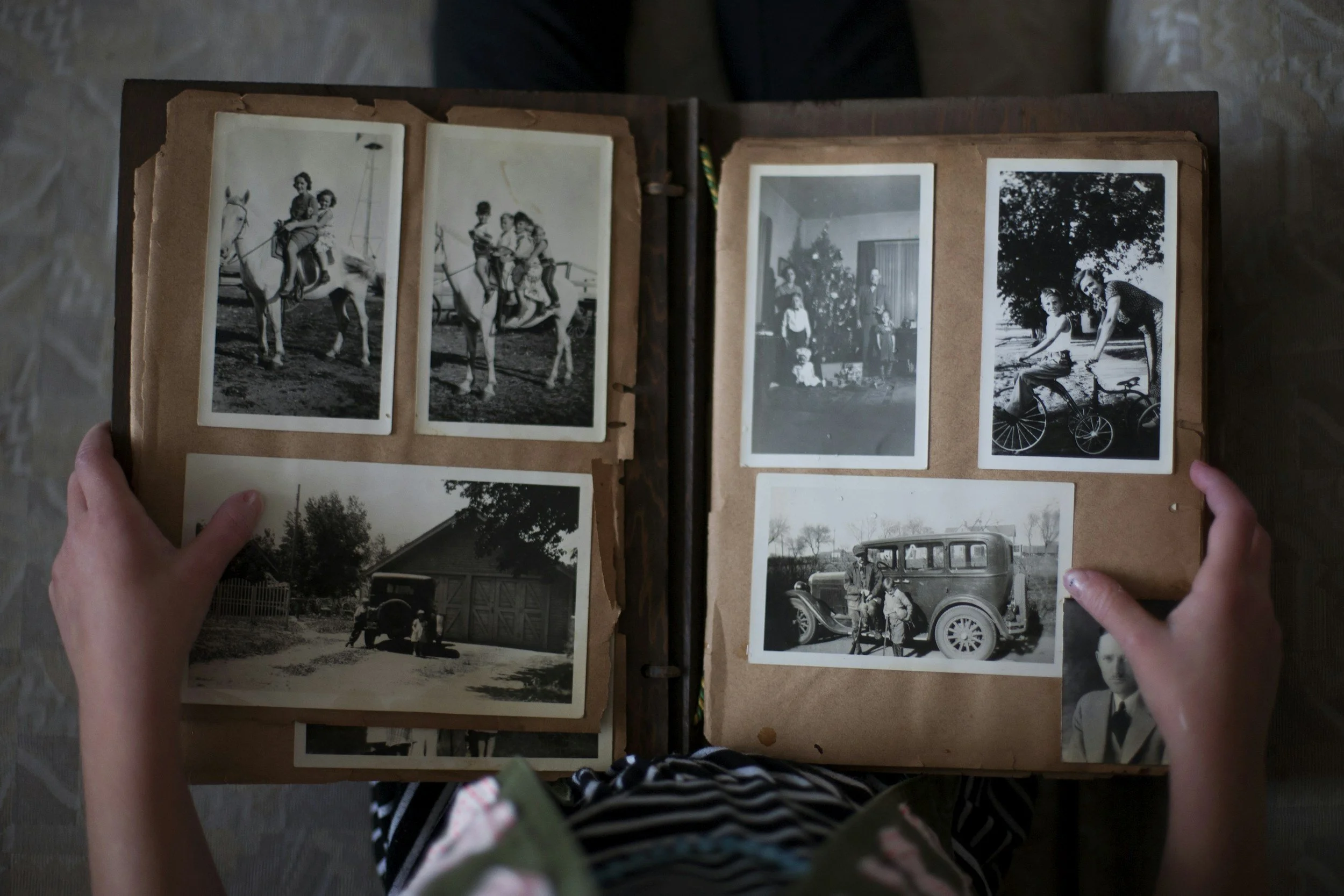
For me, that anchor was the slideshow of family photos playing throughout the visitation. Whenever I noticed myself feeling overwhelmed or wondering what might happen next, I would sit quietly and watch the pictures. Instead of focusing on the room, I found myself remembering the moments we had shared and reflecting on the woman we had come to celebrate.
It was also a gift to hear stories about her that even her own children had never heard. I learned more about how deeply she lived her values. During segregation, she refused to enter businesses that served only white customers. Sitting beside my own children as they listened to those stories, I could see the pride on their faces. In those moments, my attention shifted away from the family dynamics and back to the reason we were all there.
One moment that surprised all of us happened after the funeral as we drove to the cemetery. My mother in law was buried in a small rural town in Ohio. As the funeral procession made its way through the countryside, people pulled their cars over to the side of the road. A few men even stepped out of their trucks, removed their hats, and bowed their heads in respect as we passed.

My children, who had grown up in a much larger city, were confused. "Why is everyone stopping?" We explained that it was an old tradition.
Complete strangers were quietly showing respect for someone they had never met.
In a day that had felt so heavy, it was a quiet reminder that even in a world that can feel deeply divided, moments of shared humanity still exist. Once again, my attention shifted away from family dynamics and back to what we were there to do.
Protect Your Boundaries
You are not obligated to have every conversation someone wants to have. During the visitation, a family member pulled my husband aside and wondered aloud why another relative hadn't come. They speculated it was probably because of something that had been said recently. Rather than taking the conversation in that direction, my husband simply smiled and said, "Let's just focus on my mom today."
That one sentence gently brought everyone's attention back to why we were there. It reminded me that protecting your boundaries doesn't always require a long explanation or confrontation. Sometimes all it takes is redirecting the conversation toward what matters most.
Give Yourself Permission to Leave
If the environment becomes emotionally overwhelming or too much for your nervous system, you don't have to stay. Leaving early doesn't mean you loved the person any less. Sometimes honoring both your loved one and your own well being means recognizing when you've reached your limit.
For us, the funeral wasn't just a single event. It was an entire day of transitions, beginning with a two hour family viewing, followed by the funeral, the graveside service, a stop at the family home where she had grown up, and ending with a meal shared with extended family. By that point, the four of us had all reached our limit. We're all neurodivergent, and it had been a long day of transitions, social interaction, and emotional intensity. Thankfully, the meal was at the hotel where we were staying, so we let the kids head upstairs to decompress.
Before understanding neurodivergence, I probably would have insisted they stay because I thought leaving early would look rude or disrespectful. I felt the pressure to meet everyone else's expectations, even if we were completely burned out. This time, I knew preserving our nervous systems mattered more than meeting someone else's expectations.

My husband and I took turns stepping away throughout the day, finding quiet moments to reset. As the day went on, conversations shifted from remembering my mother in law to the practical realities that follow a death. Soon, people were talking about what would happen to the house and sorting through a lifetime of possessions. Different opinions and emotions began to emerge. After an already emotional day, our family simply didn't have the capacity for those conversations.
Later that evening, the family wanted to continue gathering at my mother in law's favorite restaurant. It was hard to say no. I worried about disappointing people. But I also knew that everyone in my immediate family had reached their capacity. Pushing through one more event wouldn't have honored anyone. It would have increased the chances that one of us would end the day overwhelmed, exhausted, or in meltdown. Everyone had done such a remarkable job focusing on my mother in law instead of their differences. I didn't want sheer exhaustion to undo that. Sometimes the kindest thing you can do for yourself and your family is recognize when it's time to leave. Sometimes it's taking a short break. Sometimes it's ending the day a little earlier than everyone else.
After the Funeral
Resist the Urge to Replay Every Interaction

If you're someone who tends to replay conversations afterward, know that this is a common stress response. Try not to spend hours wondering whether you said the right thing or analyzing every facial expression. Your brain may be searching for certainty in a situation that simply doesn't have it.
After the funeral, I was so emotionally and physically exhausted that I could barely process everything that had happened. Once I finally had a chance to rest, my brain wanted to go back and replay the day. What did they mean when they said that? Did you notice their tone? Were they upset? Did I miss something?
At first, it felt like I was trying to make sense of the day. Eventually, I realized I wasn't gaining any new understanding. My dysregulated brain had simply found something to latch onto. Instead of helping me recover, it was keeping me emotionally stuck in the funeral long after it had ended.
Once I slowed down, got some sleep, and gave my nervous system time to recover, I found myself replaying the day a lot less.
Give Yourself Time to Recover
Even if everything goes smoothly, funerals are emotionally exhausting. If your family has a history of conflict, you've likely spent hours monitoring the emotional temperature of the room. That takes energy.

Plan for a quieter evening if you can. Rest. Spend time with someone who feels safe. Cuddle your pet. Let your nervous system settle before jumping back into everyday life.
On the day of the funeral in November, I wore a pair of shoes that were just a little too small. They left both of the nails on my big toes bruised. As I sit here writing this in July, I can still see a faint blue bruise in the corner of one toe. Every time I notice it, I'm reminded how often we expect our emotional pain to heal faster than our physical pain. Healing doesn't happen because we've decided enough time has passed. If a bruise on my toe can still be healing months later, why would I expect my heart to be any different?
There Is No Perfect Decision
Some people decide attending the funeral feels important, even knowing it may be emotionally difficult. Others realize that the emotional cost of attending is simply too high.
I've made both decisions.

There have been funerals we chose not to attend because of the distance, the expense, or because our family's capacity was already stretched too thin. There have also been times when we knew certain family members wouldn't respect our boundaries. We anticipated conversations we weren't willing to have and recognized that attending would leave us emotionally depleted rather than honoring the person we had lost.
Sometimes the relationship with the person who died is complicated. You may be grieving what was, what could have been, or what never was. Funerals don't erase those complexities. Choosing not to attend doesn't necessarily mean you loved the person any less. Choosing to attend doesn't mean you have to stay for every event or every conversation.
The question isn't, "What's the right decision?" The better question is, "Which choice best honors both the person I'm grieving and the needs of my nervous system?" Every family is different. Every funeral is different. Trust yourself to make the decision that is right for you.
What This Funeral Taught Me
My mother in law deeply valued family. She held strong political beliefs, but she also had a remarkable ability to stay connected to people, even when they strongly disagreed. Sometimes those relationships were strained. Sometimes they were held together by little more than a thread.
That day, people held their tongues. We shared stories instead of debates. We laughed, cried, and remembered the woman we had all come to honor. For a few hours, it seemed like everyone understood that the day wasn't about old arguments or who voted for whom. It was about her.

Before we left Ohio, we carefully packed the flowers from her casket and brought them home with us to Texas. For days afterward, they sat in our home as a quiet reminder of what I wanted to carry with me from that weekend. Not the anxiety I felt getting there. Not the political disagreements. Not the family dynamics. The love that remained after everything else had quieted down.
I don't know whether that happened because people chose to set their differences aside, because they wanted to honor her, or because grief has a way of reminding us what matters most. Maybe it was a little of all three.
I also know that not every funeral unfolds this way. Some families leave feeling more connected. Others leave with fresh wounds. Both experiences are real.
What I hope you take away isn't that funerals magically heal divided families. They don't.
It's that while you can't prepare for every possible interaction, you can prepare to care for yourself no matter what the day brings. You can support your nervous system. You can protect your boundaries. You can decide what feels right for you. And you can honor someone you love without sacrificing your own emotional well being.
You never have to choose between honoring someone you love and protecting your peace. You are allowed to do both.
Frequently Asked Questions
-
There isn't one right answer. Some people find attending important for their own grieving process. Others decide the emotional cost is simply too high. The better question is: Which choice best honors both the person you're grieving and your own emotional well being?
-
You don't have to engage. It's okay to redirect the conversation, excuse yourself, or simply say, "I'd rather focus on remembering them today." Protecting your boundaries doesn't require you to debate, defend yourself, or change anyone's mind.
-
Focus on the things you can control. Think about who you'll sit with, where you can take a break if needed, how long you want to stay, and what boundaries you want to maintain. Preparing yourself is often more helpful than trying to predict everyone else's behavior.
-
It's common for conversations to shift toward practical decisions about belongings, estates, or family dynamics after a funeral. If those conversations become too much, it's okay to step away. You don't have to stay for every discussion or solve every disagreement.
-
Yes. Many people replay conversations after emotionally intense events. Your brain may be searching for certainty or trying to make sense of what happened. If you notice yourself getting stuck, try shifting your attention toward rest, connection, and giving yourself time to recover instead of analyzing every interaction.
-
You may notice you're becoming more irritable, emotionally exhausted, overwhelmed by conversation, or finding it harder to stay present. You don't have to wait until you're completely burned out. Sometimes leaving before you reach that point is the kindest thing you can do for yourself.
-
Absolutely. Funerals can be emotionally, socially, and physically exhausting, especially if there are multiple events throughout the day. Leaving early doesn't mean you loved the person any less. Sometimes it's the healthiest way to care for yourself and your family.
-
Yes. Many funerals involve more than the service itself. There may be a visitation, graveside service, family meal, or additional gatherings. You don't have to attend every event if doing so would leave you emotionally depleted.
-
Feeling guilty is common, especially if you've spent years putting other people's expectations ahead of your own needs. Leaving because you've reached your capacity doesn't mean you cared any less. It means you're recognizing your limits before becoming overwhelmed.
-
Yes. Grief is complicated enough on its own. When it's combined with family conflict, political division, or estrangement, it can become even more overwhelming. Therapy can provide a space to process your grief, strengthen your boundaries, and make decisions that align with your values rather than guilt.

Dr. Christine Henry, Licensed Psychologist
Dr. Christine Henry is a licensed psychologist who helps adults navigate family estrangement, grief, trauma, and neurodivergence. She understands that family relationships can be both deeply meaningful and deeply complicated, and believes you shouldn't have to choose between honoring the people you love and caring for yourself.
If you're looking for support as you navigate grief, family estrangement, or complicated family relationships, I'd be honored to help. Learn more about working with me or schedule a free consultation.
Not ready for therapy?
That's okay. Sometimes the first step is simply making sense of your experiences. If you're navigating a disconnected, toxic, or estranged family relationship, I've created a resource page filled with articles, books, podcasts, and other resources to help you make sense of your experiences. Read More About Coping with a Disconnected, Toxic, or Estranged Family